A Complete Guide to Pope Leo’s First Encyclical: Magnifica Humanitas
Signed on May 15, 2026, and released on May 25, 2026, the document explores technology, human identity, work, truth, and the Christian vision of authentic humanity. Here’s everything you need to know about Magnifica Humanitas.
10 Powerful Quotes from Pope Leo XIV’s First Encyclical: Magnifica Humanitas
Pope Leo XIV’s first encyclical, Magifica Humanitas, offers a sweeping reflection on the human person in the age of rapid technological change, especially the rise of artificial intelligence. Addressing questions of dignity, justice, and moral responsibility, the document speaks directly to the challenges of modern life while grounding its vision in the timeless truth of the Gospel.
5 Key Paragraphs from Pope Leo XIV’s Magnifica Humanitas
Five paragraphs of Pope Leo XIV's encyclical do the load-bearing work, and if you read those five you have the substance. The rest of the document deepens, develops, applies. The five are where Leo XIV makes the moves that matter.
Pope Leo XIV’s encyclical letter Magnifica Humanitas (“Magnificent Humanity”) addresses the safeguarding of the human person in the era of artificial intelligence (AI). It was signed on May 15, 2026, and is scheduled for release on May 25, 2026. As we anticipate its release, here are five things to know about encyclicals and how they help shape Catholic teaching for the whole Church.
The Most Favorably Viewed “Newsmaker” in the World
In an age when so many public figures divide opinion, one leader is uniting hearts across the globe: Pope Leo XIV, successor of St. Peter and shepherd of over 1.3 billion Catholics worldwide.
Pope Leo's 1st year: 12 Unique Facts, Firsts & Favorite Things
“It’s been a full 12 months since Pope Leo XIV first stepped out from the central balcony of St. Peter’s Basilica to greet the world as the 267th Vicar of Christ. And it’s certainly been an eventful year for our Holy Father–– presiding over the many celebrations in the Jubilee Year of Hope, steadfast teachings that revealed Jesus to the world, and giving us a peek at some little things that personally bring him joy.”
Fr. Gregory Pine, O.P. reacts to Pope Leo XIV's encyclical on artificial intelligence and human dignity, providing insights and explanations along the way. Discover what the encyclical is about, why it's being released now, and what it means for how Catholics should view the dawn of artificial intelligence.
Fr. Mike has been the target of many fake AI videos impersonating him online. These are all scams—and a reminder of how easy it is to be deceived by AI-generated content. In this real video, Fr. Mike offers his perspective on artificial intelligence.
Fr. Mark-Mary shares how we, as Catholics, should respond to the rise of AI. He explains how we need to be cautiously optimistic and never forget that God is with us in the midst of a technologically advancing era.
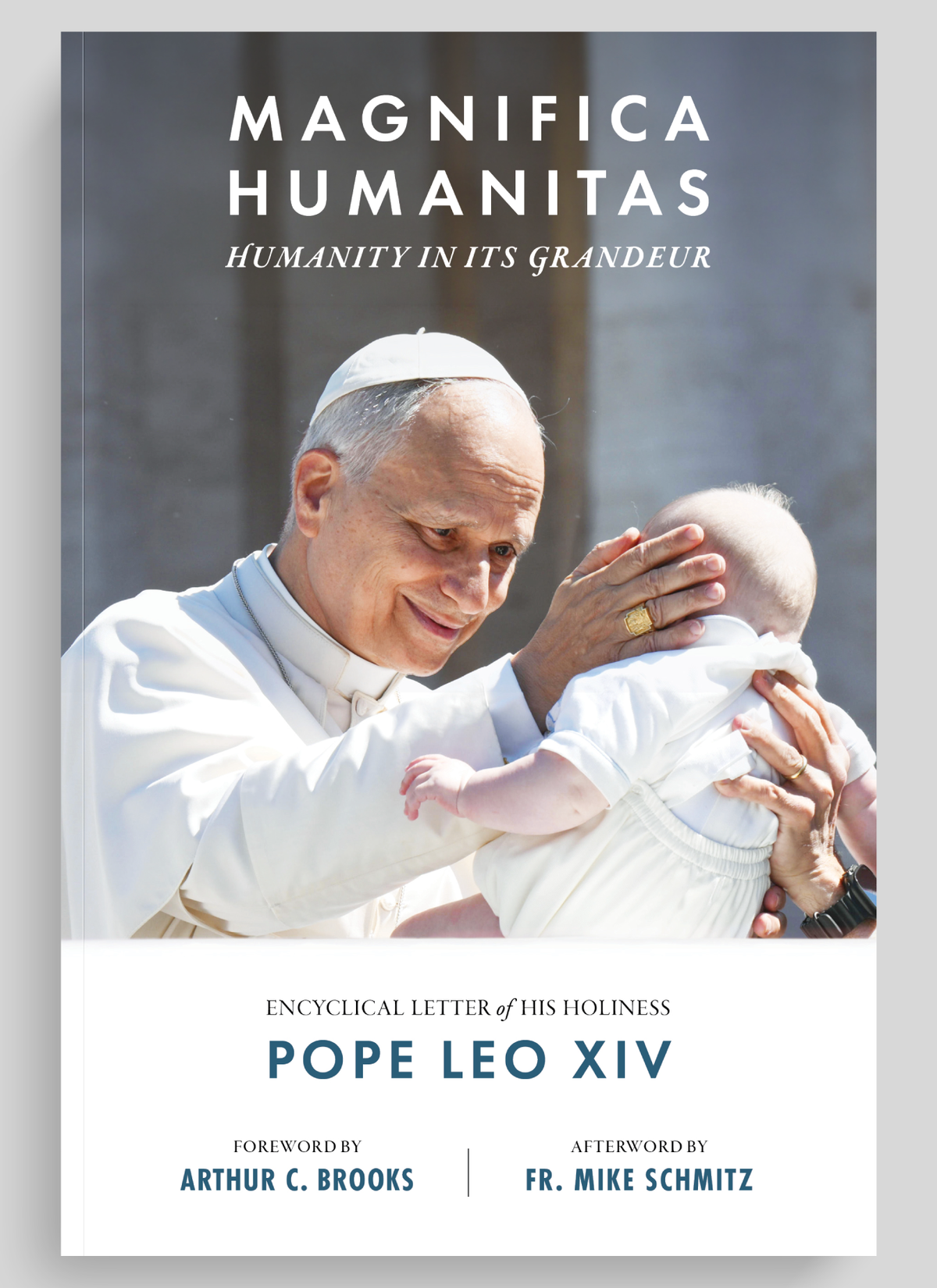
Magnifica Humanitas: On Safeguarding the Human Person in the Time of Artificial Intelligence
This encyclical was poignantly signed on the 135th anniversary of Pope Leo XIII's seminal encyclical in response to the upheaval of rapid industrialization, Rerum Novarum. Like his predecessor, Pope Leo XIV provides a response to the social, moral, and theological questions raised by the technological advances of our day.
Featuring a foreword written by Arthur C. Brooks, PhD and an afterword written by Fr. Mike Schmitz.
Forthcoming Book on Artificial Intelligence and Human Dignity
Steven Umbrello is the Managing Director at the Institute for Ethics and Emerging Technologies and a research fellow at the University of Turin. His forthcoming book will reflect on artificial intelligence through the lens of human dignity and the Catholic worldview. Sign up to be among the first to get updates about this forthcoming book:
An encyclical is a formal teaching document in which the pope, as successor of St. Peter, offers teaching on matters of faith and morals in response to the questions of the present moment.
What is the significance of its signing date?
The signing date, May 15, 2026, is the 135th anniversary of Pope Leo XIII’s landmark social encyclical Rerum Novarum (“Of New Things”), published on May 15, 1891.
Why is it called Magnifica Humanitas?
The title is Latin for “magnificent humanity.”
What precedent exists for popes to address technological issues in encyclicals, messages, and other official teachings?
It is common for popes to address the social, moral, and theological dimensions of new technologies. Pope Pius XII’s Miranda Prorsus (1957)addressed film, radio, and television; Pope St. John Paul II described the opportunities that came with the internet as “a new forum for proclaiming the Gospel” (2002); Pope Benedict XVI taught in Caritas in Veritate (2009) that technology is an expression of human freedom that must be governed by charity and truth; and Pope Francis addressed artificial intelligence directly in his 2024 messages on peace and communication.